


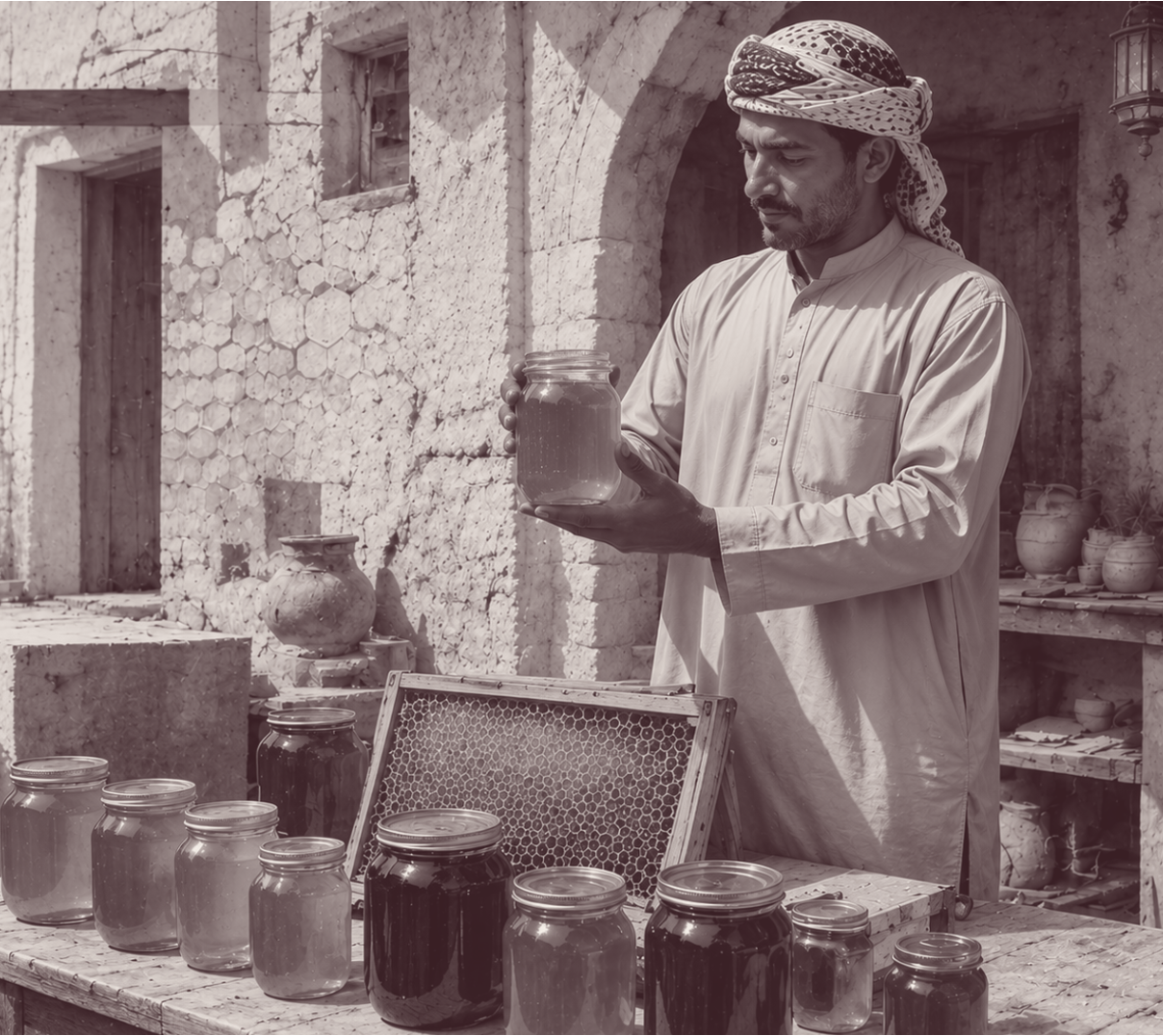
The Honey Value Chain in Hadhramaut: Capturing the True Value of Yemen’s Most Celebrated Product
Hadhrami Sidr honey is renowned worldwide, yet the beekeeper who produces it earns a fraction of its final price, and official exports record only part of what actually leaves the governorate. This report distils the sector’s own diagnosis — not a product problem, but a value-capture problem — and seventeen practical actions to fix it.
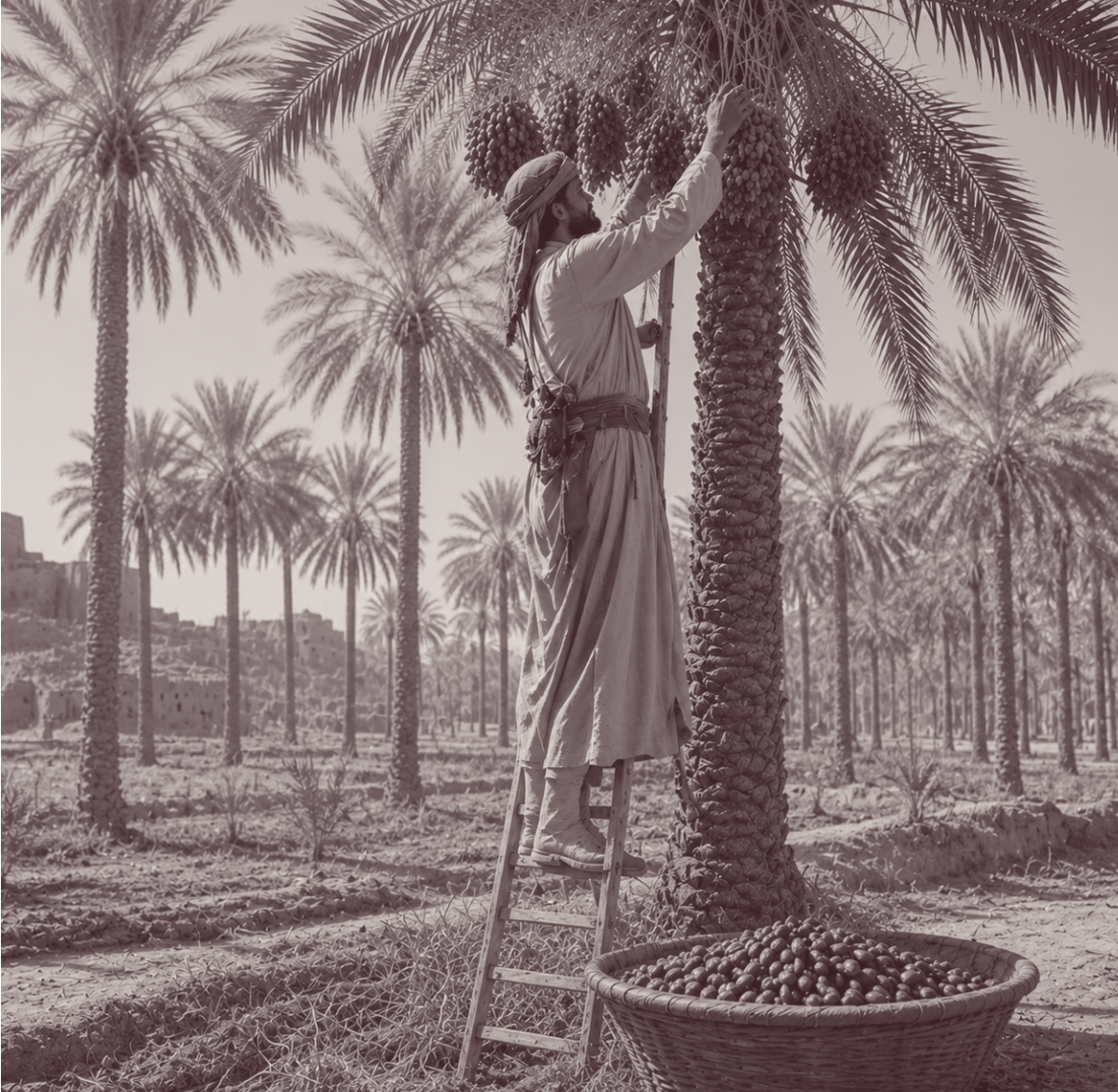
The Palm & Dates Value Chain in Hadhramaut: Reviving Demand for a Heritage Crop
Hadhramaut’s palms yield a fraction of their potential while imported dates — 48,187 tonnes in 2025 alone — displace local produce even in its home market. This session report sets out how farmers, traders, processors and government propose to protect, modernise and market one of the governorate’s oldest sources of livelihood.
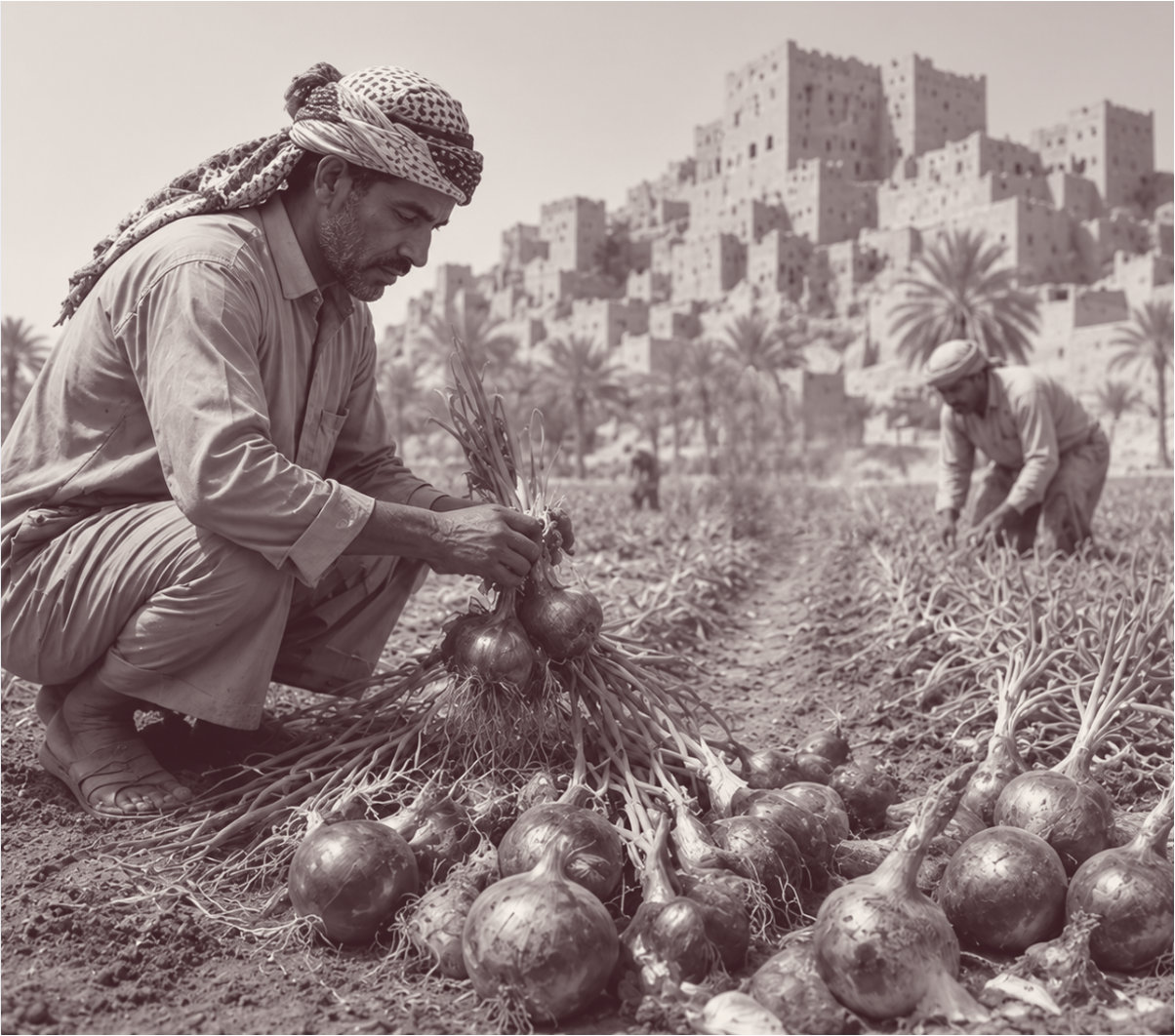
The Onion Value Chain in Hadhramaut: Unlocking the Revenue Potential of a Flagship Crop
Hadhramaut’s prized Bafatim onion reaches markets across the Gulf, yet close to a third of every harvest is lost after the field and farmers retain only 40 per cent of the crop’s final value. This session report captures what farmers, traders, exporters and government stakeholders agreed must change — and the priorities they set for reform.

The Cash Liquidity Crisis in Yemen: How monetary fragmentation, sovereign resource depletion, and institutional collapse have strangled Yemen’s financial system — and what can be done about it.
This policy paper examines Yemen’s cash liquidity crisis as a structural consequence of monetary fragmentation, depleted sovereign revenues, weakened banking confidence, and the expansion of informal financial channels. It analyzes how the crisis affects households, businesses, public services, and market stability, while outlining practical policy options to restore confidence, improve liquidity management, and strengthen formal financial institutions.

The Architecture of Dependency: Political Economy of Donor Funding in Yemen
"This is not a failure of effort, resources, or technical knowledge. It is a failure of political economy design — a system configured, often unconsciously, to reward intermediaries rather than institutions, activity rather than persistence, and performance rather than change. The implications extend beyond Yemen. The structural dynamics described in this brief — donor fragmentation, intermediary capture, performance theatre, and the systematic marginalisation of domestic reformers — are not Yemeni peculiarities. They are endemic features of fragile-state aid architectures globally."

The Silent Reform Barrier: Why Institutional Memory Is the Missing Link in Yemen Public Sector Reform
When discussing reforms in Yemen’s public sector, the conversation often centers on the war and its immediate effects. However, a more significant issue exists: the loss of institutional memory. This slow decline makes real reform difficult, as the history and reasons behind institutions fade. Without understanding the purpose of these entities and the problems they were meant to address, reform efforts are likely to be misguided. To truly change Yemen’s governance, rebuilding this institutional memory is crucial, ensuring that reforms are not just ambitious ideals but connected to the realities of the past and present.